Lake Kawaguchi sits 109 km from Shinjuku, close enough that a car leaving your hotel at seven reaches Chureito Pagoda before the coaches do. Ten Mount Fuji private tour options from Tokyo, compared by price, group cap and what you still pay at the gate.
A private Mount Fuji tour from Tokyo runs 8 to 12 hours and costs $297 to $490 for the whole car, roughly ¥49,000 to ¥80,000, not per person. That buys hotel pickup inside Tokyo's 23 wards, a driver-guide who speaks English, and a route you rearrange during the day. Entry fees, meals and the 2,800 yen (about $17) Subaru Line toll sit outside the price on every listing here.
Key takeaways
Most-reviewed pick: the Fuji and Hakone day with a green-plate licensed operator, $490.04 (about ¥80,000) per group of up to 5, rated 4.9 from 2,490 reviews
Cheapest flat rate: $297, about ¥49,000, per group for up to 6 people, 10 to 12 hours, two set itineraries
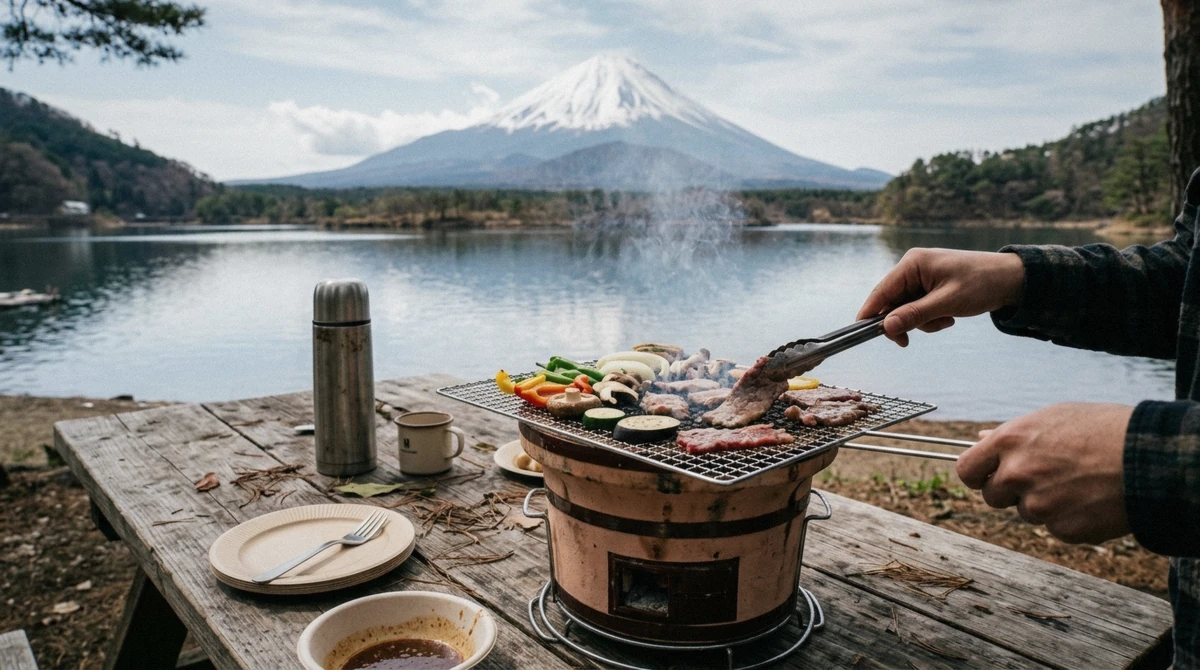
Cheapest per head if you are travelling alone or as a pair: $274.67, about ¥45,000, per person with a Japanese BBQ lunch included
For two travellers only: $348.33, about ¥57,000, per group, 8 to 9 hours, pickup confirmed by WhatsApp the day before
A nationally-licensed guide with admissions included is a different market: 177,000 yen, about $1,080, for two people on a 10-hour day
Every tour on this page cancels free up to 24 hours before pickup
Free cancellation 24h
Reserve now, pay later
English-speaking driver-guides
Hotel pickup, Tokyo 23 wards
$297Lowest flat rate, about ¥49,000
8–12 hrsLength of a private day
2,300 mHighest point reachable by road
80 daysClear views of Fuji per year
top pick
The Private Fuji Day with the Deepest Track Record
Private Mount Fuji and Hakone Day Trip with a Licensed Operator
★★★★★★★★★★4.9(2,490 reviews)
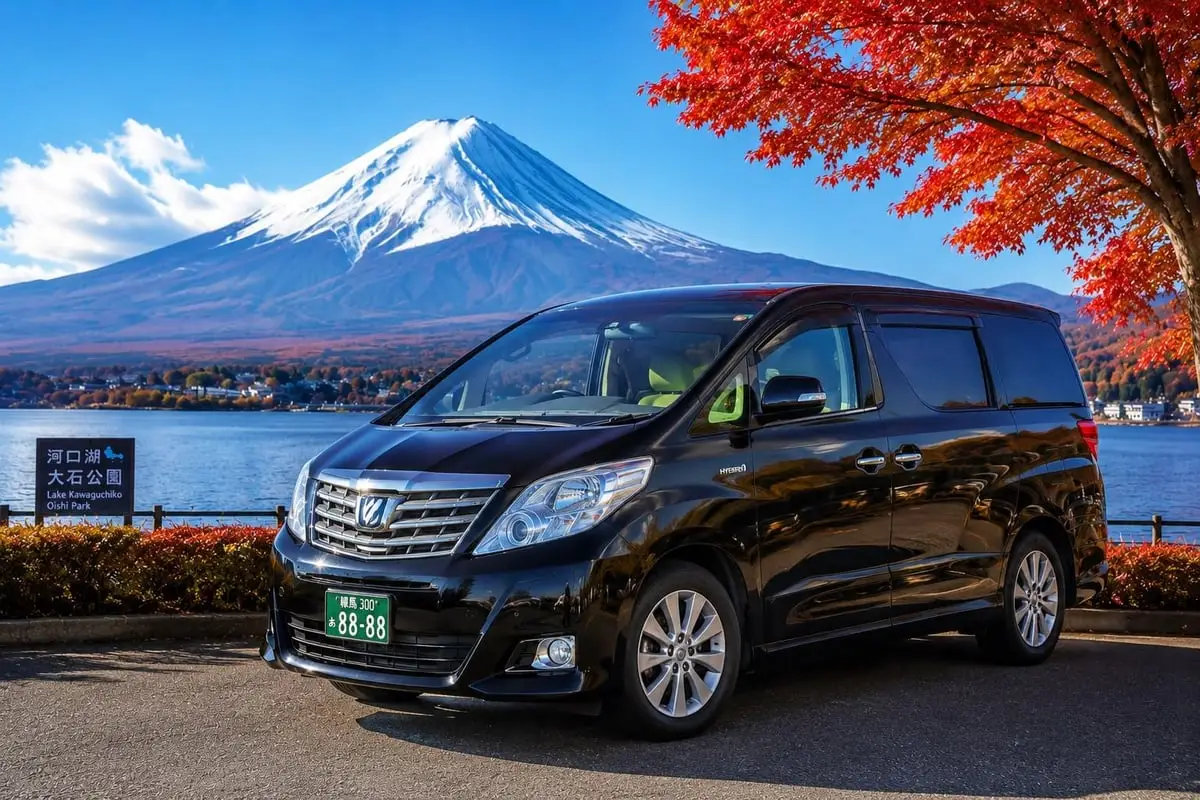
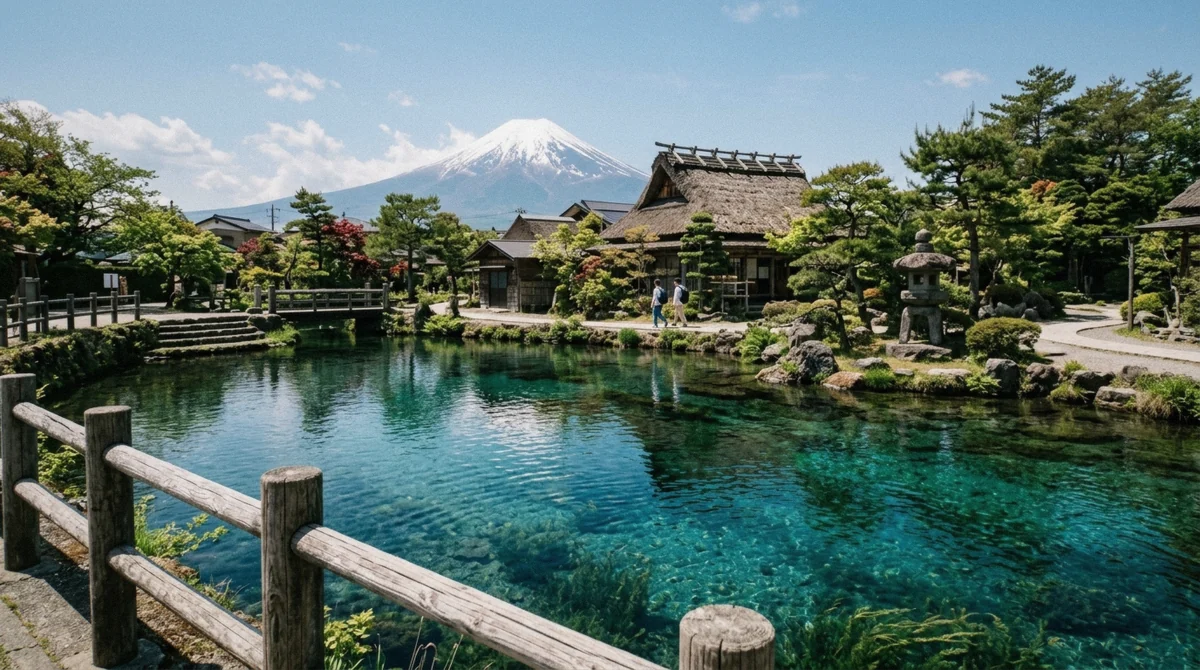
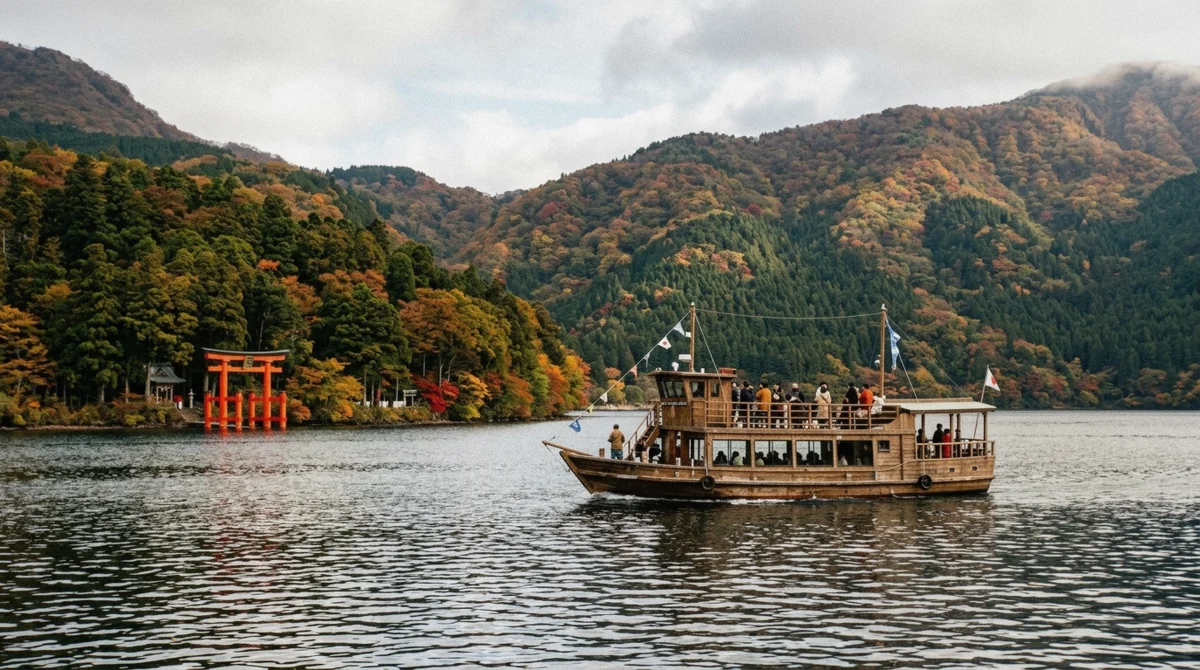
The most-reviewed private Fuji day on this page by a wide margin, and the one that makes a point of its paperwork: green commercial number plates, a commercial driving permit and commercial insurance, rather than the white-plate cars that operate without them. The route is yours to shape — the Mt. Kachi Kachi ropeway, a Lake Kawaguchi cruise, the 5th Station, Arakura Fuji Sengen Shrine, Oshino Hakkai, or a pirate ship across Lake Ashi. Lunch and activity tickets are extra.
Ten private cars and vans running the Tokyo to Fuji corridor now. Prices are for the whole group unless the card says per person, and none of them include entry fees or the Subaru Line toll. Yen conversions on this page use ¥164 to the dollar, the rate on 27 July 2026.
from $327 per group (up to 5)
Private Mount Fuji Day Tour from Tokyo with a Multilingual Driver-Guide
★★★★★★★★★★4.9(547 reviews)· 10–11 hours
A flat-rate private car day from Tokyo with a driver-guide who works in English, Spanish, Hindi, Arabic and other languages on request. Route A runs the Fuji Five…
One price for the whole group of up to five, not per person
Choose the Fuji Five Lakes route or swap in Hakone
Halal and vegetarian meal stops arranged on request
Vellfire, Alphard, Voxy or Elgrand depending on group size
Mount Fuji, Hakone and Gotemba Private Tour from Tokyo
★★★★★★★★★★5.0(37 reviews)· 10–12 hours
The cheapest per-group rate of the private days listed here, and it stretches furthest: Itinerary A covers the 5th Station, Chureito Pagoda, Oshino Hakkai, Lake Kawaguchiko, Oishi Park…
Up to twelve hours — the longest day on this list
Two set itineraries: Fuji Five Lakes or Fuji plus Hakone
Private Mount Fuji and Hakone Luxury Car Tour from Tokyo
★★★★★★★★★★4.9(117 reviews)· 10 hours
A driver service rather than a licensed guide, and the listing says so plainly — your driver handles the route, timing and local tips, but does not guide…
Honest listing: driver service, not a licensed in-attraction guide
Pickup anywhere inside Tokyo's 23 wards
Four to five stops recommended, plus one optional extra
Wi-Fi and bottled water in an air-conditioned vehicle
Private Mount Fuji Day Trip with Hotel Pickup and Drop-Off
★★★★★★★★★★4.9(278 reviews)· 10 hours
A ten-hour private van day that starts at Lake Kawaguchi and then follows whatever you pick: Oshino Hakkai's spring ponds, the 5th Station, or Oishi Park for the…
Guide and driver both included, not driver only
Fits six for one group price
Starts at Lake Kawaguchi, then follows your picks
Air-conditioned van with hotel pickup and drop-off
The clearest structure of the group: you choose five locations from a set list — Lake Kawaguchi, the 5th Station, Chureito Pagoda, Oshino Hakkai, Saiko Iyashi-no-Sato Nemba, the…
Pick five stops from a fixed list before you travel
Private Mount Fuji Tour with Chureito Pagoda and Lake Yamanaka
★★★★★★★★★★5.0(155 reviews)· 8–9 hours
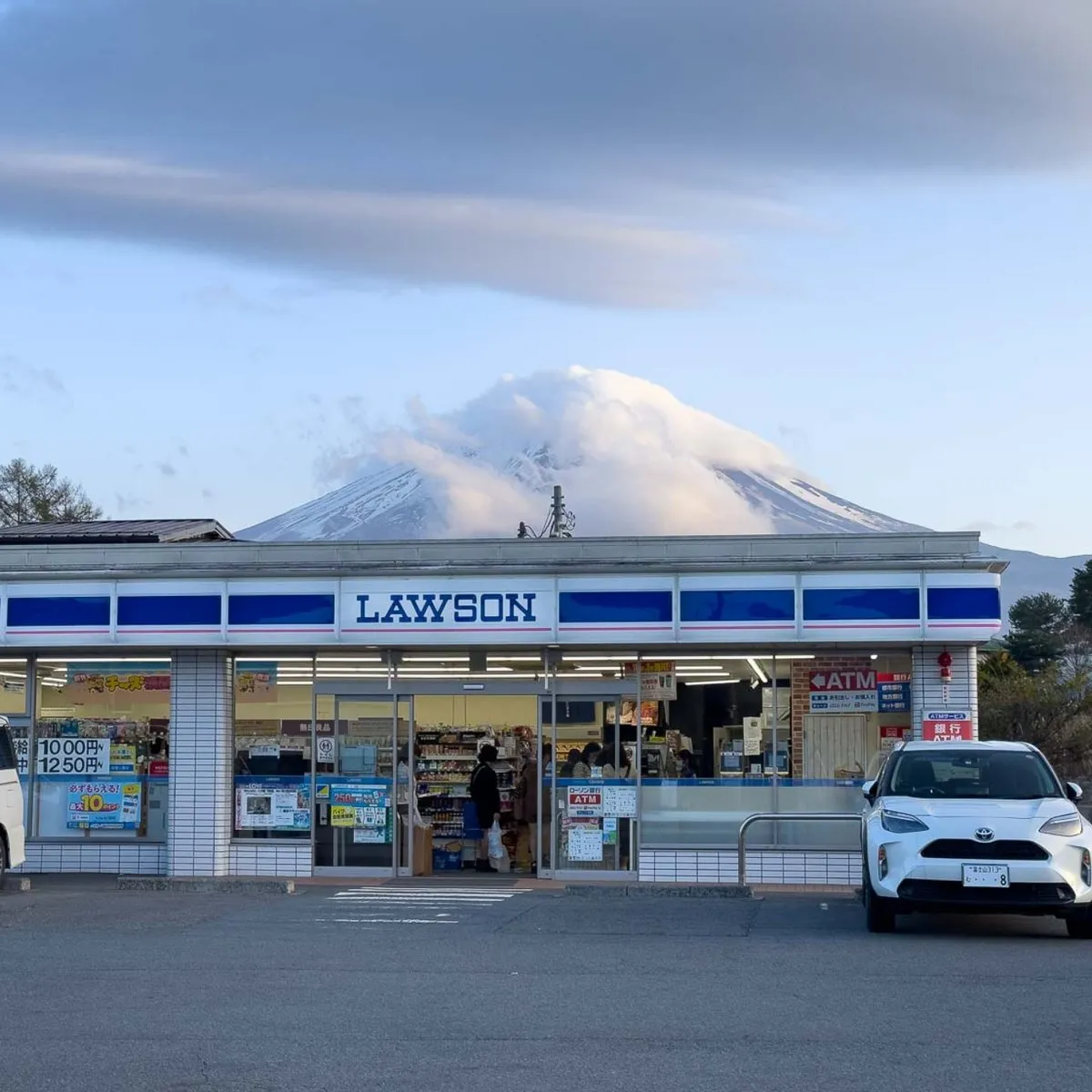
A twelve-stop menu you cut down on the day: Chureito Pagoda and Arakura Fuji Sengen Shrine first thing, then Oshino Hakkai, Lake Kawaguchiko, the Lawson store where Fuji…
Twelve possible stops, trimmed to fit your day
Includes the viral Lawson Kawaguchiko photo spot
Halal and Muslim-friendly version available
Infant seats available; pickup across Tokyo's 23 wards
Private Mount Fuji and Hakone Day Trip with a Licensed Operator
★★★★★★★★★★4.9(2,490 reviews)· 10 hours
The most-reviewed private Fuji day on this page by a wide margin, and the one that makes a point of its paperwork: green commercial number plates, a commercial…
2,490 reviews at 4.9 — the deepest track record here
Green commercial plates, permit and commercial insurance
Offered in English and ten other languages
Airport and port transfers priced separately on request
Private Mount Fuji Tour for Two with an English-Speaking Driver
★★★★★★★★★★5.0(65 reviews)· 8–9 hours
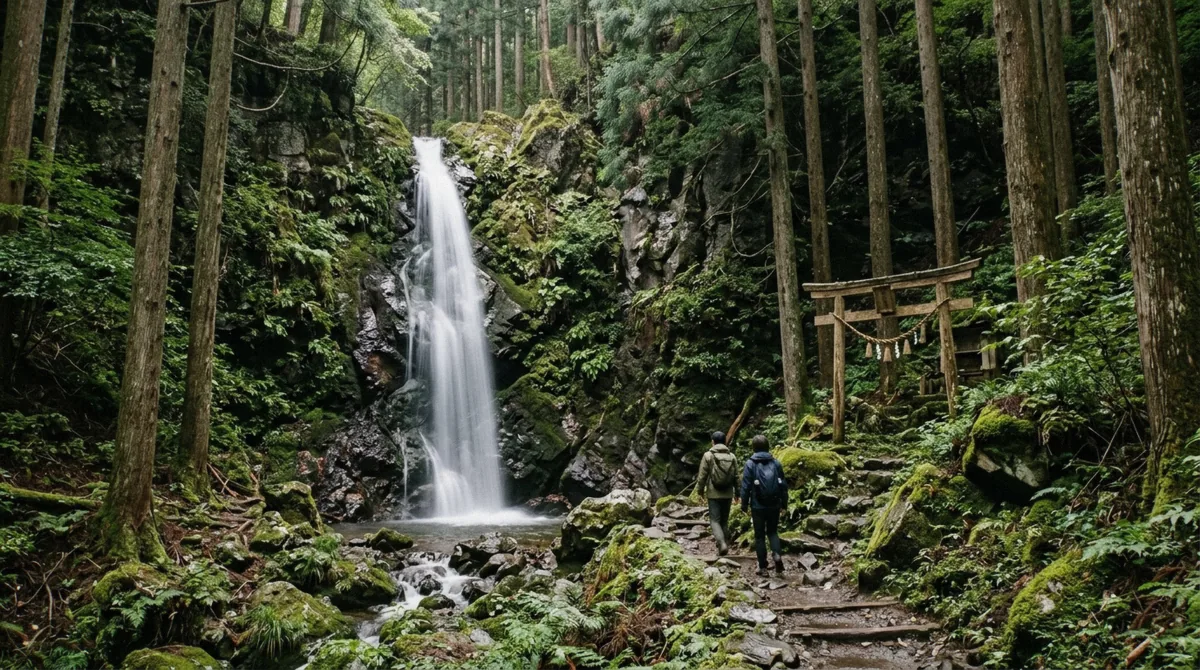
Built for a pair rather than a family, this nine-hour run takes in Arakurayama Sengen Park and its 400 steps, the Haha-no-Shirataki waterfall on an old pilgrimage path…
Sized and priced for two travellers
Includes the quiet Haha-no-Shirataki waterfall and shrine
Optional Mount Fuji Panoramic Ropeway up Mount Tenjo
Clear-view weeks in November and February book out first, and one operator reports an average of 76 days between booking and travel. Dates move faster than prices.
The same mountain, ten different ways of buying the day. Group cap is what decides the real cost per head. At ¥164 to the dollar, $300 is about ¥49,000.
The booking price buys the car, the driver and the fuel. These are the costs that land on you during the day, and most of them want cash or an IC card. Dollar figures convert at ¥164, the rate on 27 July 2026.
¥2,800 · $17Fuji Subaru Line tollPer vehicle, not per person. This is the '¥2,800 Mount Fuji fee' the listings quote, and it is a road toll to the 5th Station
¥1,000 · $6Mount Fuji Panoramic RopewayRoughly, per adult, up Mount Tenjo above Lake Kawaguchi. Not included on any tour here
¥300 · $2Hannoki Bayashi museumThe only paid corner of Oshino Hakkai. Walking the eight spring ponds costs nothing
¥500 · $3Saiko Iyashi-no-Sato NembaPer person for the thatched-roof village, listed as an entrance fee on two of these tours
$50 · ¥8,200Overtime per hourPublished by one operator for time beyond the booked 10 hours, paid direct to the driver
LunchMealsExcluded on nine of the ten tours. Only the BBQ day feeds you as part of the price
How to Choose a Private Mount Fuji Tour
What the Flat Group Price Buys
Nine of the ten tours on this page charge for the car, not the seat. You book a vehicle with a cap of two, three, five or six people, and the price stays the same whether you fill it or not. That single detail decides everything about value. At $297 for up to 6, about ¥49,000, the cheapest day here works out at $49.50 a head with a full car and $148.50 with two of you.
What sits inside the price is consistent: hotel pickup and drop-off inside Tokyo's 23 wards, an air-conditioned Japanese van or car, fuel, highway tolls, parking, and a driver who speaks English. Several throw in bottled water and a Wi-Fi hotspot. Vehicles run from a Toyota SAI up to an Alphard, a Vellfire, a Voxy or a Nissan Elgrand, chosen for group size.
What sits outside it is just as consistent, and it catches people out. Entry tickets, meals, ropeway rides and the 5th Station road toll all come out of your pocket during the day.
Cheapest flat rate: $297 (¥49,000) per group, up to 6 people, 10 to 12 hours
Most reviews by far: $490.04 (¥80,000) per group, up to 5, 4.9 from 2,490 reviews
Cheapest per head travelling alone: $274.67 (¥45,000) per person with lunch included
Sized for a couple: $348.33 (¥57,000) per group, up to 2, 8 to 9 hours
Every tour here refunds in full up to 24 hours before pickup
What a Ten-Hour Private Day Covers
Pickup lands between 6:30 and 9:00 depending on the operator, and the earlier slot exists for a reason: cloud builds over the mountain through the morning. The drive out of Tokyo runs about 109 km on the Chuo Expressway and takes roughly two hours in clear traffic.
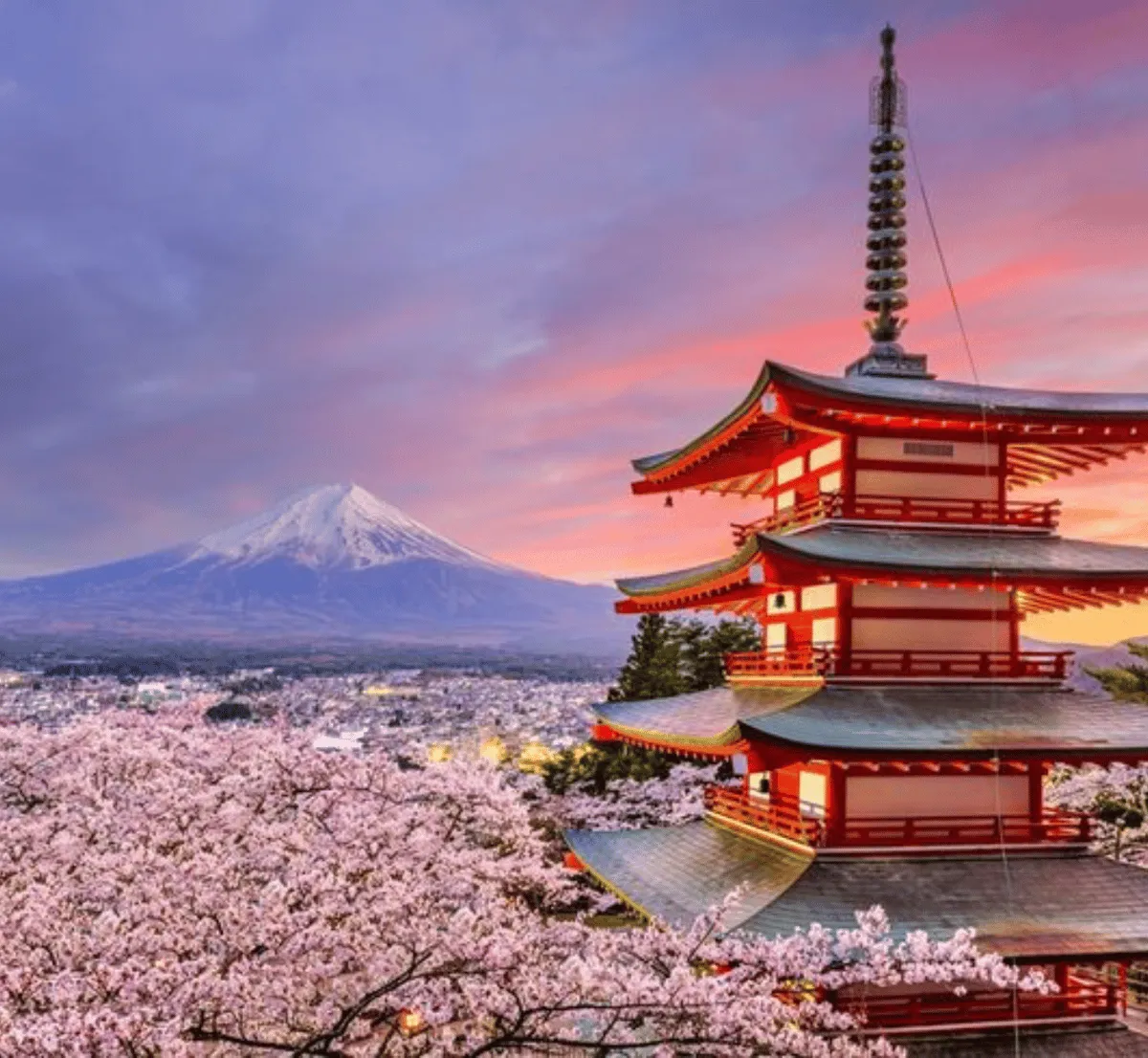
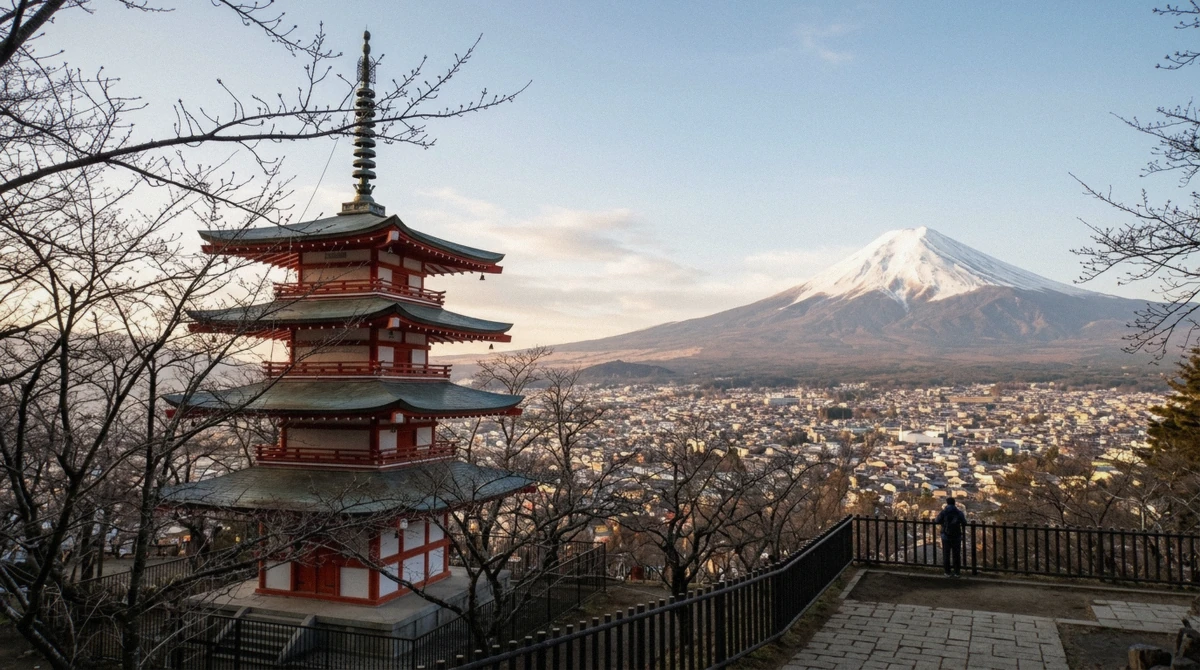
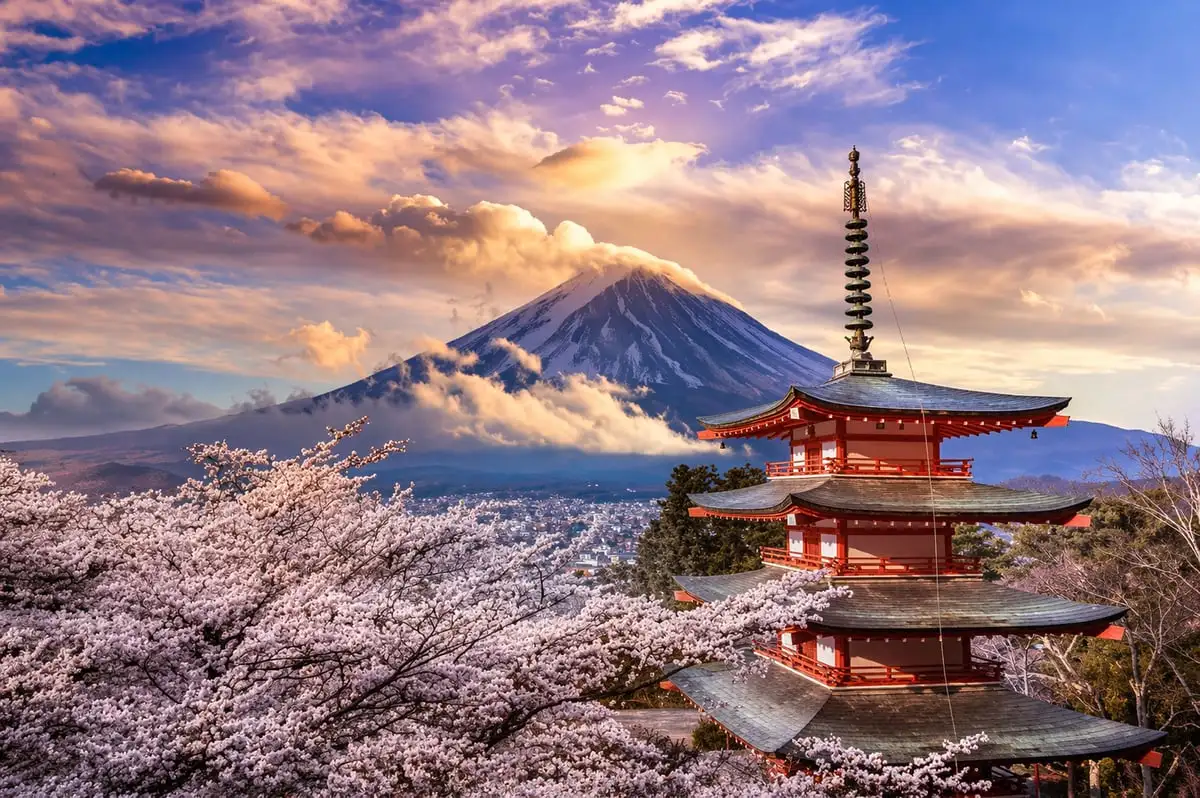
The standard first stop is Arakurayama Sengen Park, where 398 stone steps climb to Chureito Pagoda and the view that sells the whole region. The park never closes and charges nothing to enter. Most drivers give it 45 minutes to two hours depending on how hard you want to work the steps.
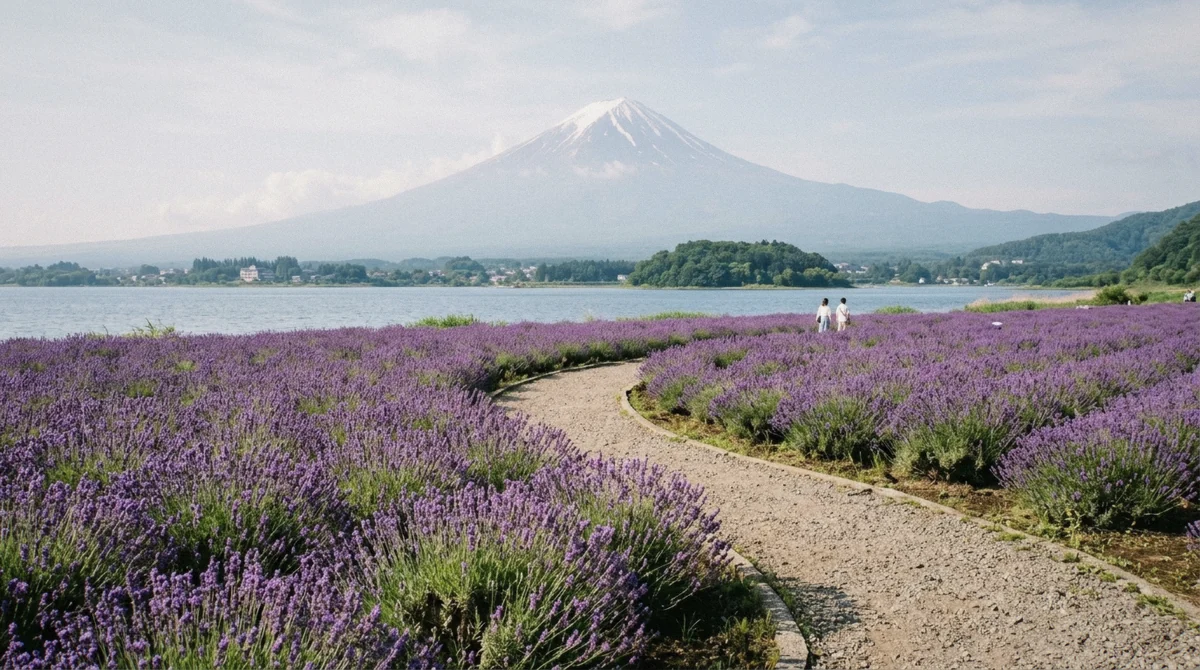
From there the day usually runs south and west: Oshino Hakkai and its eight spring ponds, half an hour at Lake Kawaguchiko, the Lawson store where the mountain lines up behind the blue sign, and Oishi Park on the northern shore for flower beds against the cone. The 5th Station goes in when the road is open, and it eats an hour of the day on its own.
Operators are honest about the ceiling. One states in its own listing that four or five main stops is what a 10 hours day holds, with room for one extra. Anything past that turns the day into a drive between car parks.
Stop
Typical time
Cost to enter
Chureito Pagoda, Arakurayama Sengen Park
45 min to 2 hrs
Free, 398 steps
Fuji Subaru Line 5th Station
1 hr
2,800 yen road toll per car, about $17
Oshino Hakkai spring ponds
50 min
Free, 300 yen ($2) for the museum house
Lake Kawaguchiko and Oishi Park
30 to 60 min
Free
Lawson Kawaguchiko photo stop
20 min
Free
Saiko Iyashi-no-Sato Nemba
30 min
500 yen ($3) per person
Gotemba Premium Outlets
Up to 2 hrs
Free to enter
The 5th Station, the Toll and the Summer Car Ban
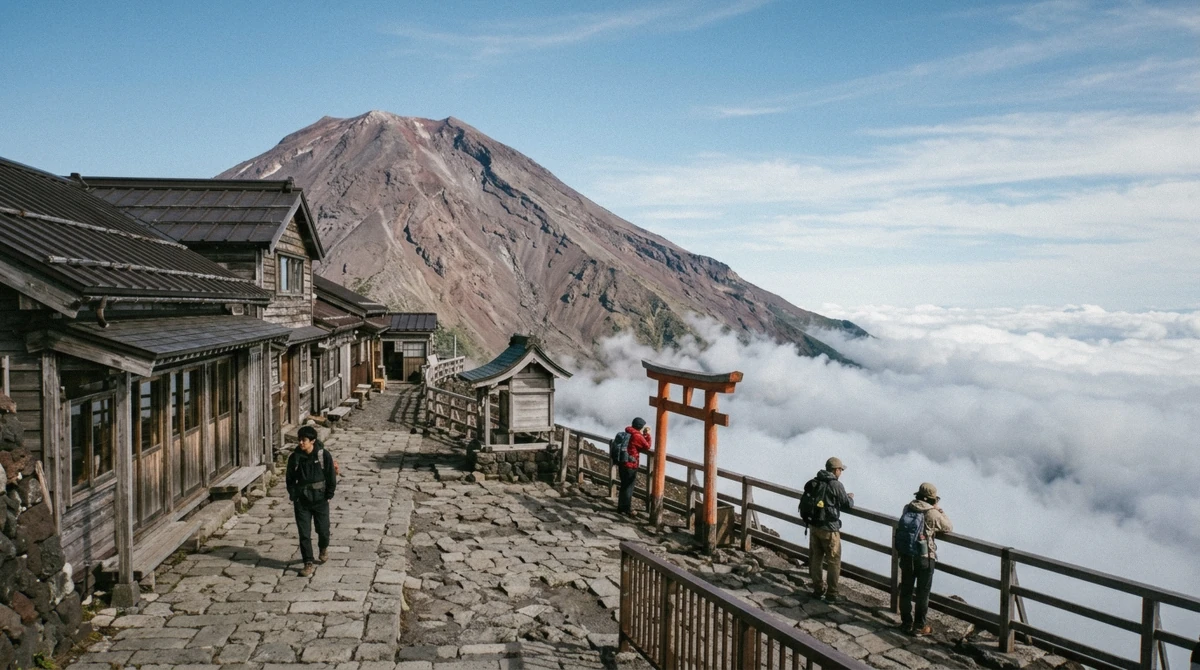
The Fuji Subaru Line 5th Station sits at 2,300 metres and is the highest point on the mountain you can reach on wheels. The road up is a private toll road, and a passenger car pays 2,800 yen, about $17. When a listing shows a line item called 'Mt Fuji entrance fee 2800¥ per group', that is the toll, charged per vehicle rather than per head.
For ten weeks of summer, no private car goes up at all. Yamanashi closes the Subaru Line to private vehicles from 3 July to 10 September 2026 to keep the climbing season moving. Tours park at the base and switch to a shuttle bus, which costs time and changes the shape of the day. Ask before you book a July or August date whether the 5th Station is still on the route.
The other number people trip over is the 4,000 yen fee, about $24, announced for 2026. That is a climbing permit for the Yoshida Trail, booked online and shown as a QR code at the gate. It applies to people walking to the summit, not to visitors who drive up, buy a souvenir and look at the view.
Winter brings its own risk. The road stays open outside the ban, but heavy snow closes sections at short notice, and no driver can promise the 5th Station between December and March.
Private Tour or Doing It Yourself
Getting to the Fuji Five Lakes without a tour is simple and cheap. The Fuji Excursion limited express runs Shinjuku to Kawaguchiko in about 1 hour 55 minutes for around 4,200 yen, about $26, each way. The highway bus from Shinjuku costs about 2,200 yen, roughly $13, and takes just under two hours, with roughly two departures an hour. Both drop you at Kawaguchiko Station.
The problem starts after you arrive. The sights are spread across 20 km of valley with a bus every half hour, and the bus up to the 5th Station adds 2,000 yen one way or 3,400 yen return, about $12 and $21, for a 50 minutes climb. A day built on public transport gets you two stops, maybe three.
Driving yourself costs 3,000 to 4,000 yen in Chuo Expressway tolls round trip, roughly $18 to $24, plus the 2,800 yen Subaru Line toll, plus parking and a rental car that most visitors would rather not take onto a Japanese expressway on their first week in the country.
Here is the honest comparison. For one or two people on a tight budget, the train plus a shared coach seat wins on money. A shared coach day tour starts around $49 per person, about ¥8,000. For three or more, or for anyone who wants six stops instead of two, the private car costs less per head than it looks.
How you go
Cost
Time from Tokyo
Stops in a day
Fuji Excursion train
About 4,200 yen each way, $26
1 hr 55 min
Two, maybe three
Shinjuku highway bus
About 2,200 yen each way, $13
Just under two hours
Two, maybe three
Shared coach day tour
From $49 per person, ¥8,000
About two hours
Three to four, fixed
Self-drive rental
3,000 to 4,000 yen tolls plus the 2,800 yen toll road, $35 to $41
Two hours
Five, if you navigate well
Private car and driver
$274.67 to $490.04 per group, ¥45,000 to ¥80,000
Two hours, door to door
Four to six, your choice
Green Plates, White Plates and Who Is Allowed to Drive You
One listing on this page sells itself on green commercial number plates and warns you about white ones. That is worth explaining, because it is the difference between a legal service and an illegal one.
In Japan, a vehicle carrying paying passengers needs a commercial transport permit, and a permitted vehicle wears a green number plate. Private cars wear white plates. Running a paid ride in a white-plate car is what Japanese police call shirotaku, and the Road Transportation Act sets the penalty at up to three years in prison or a fine of up to 3 million yen, around $18,000.
For you as the passenger, the practical risk is insurance. Commercial operators carry commercial cover for the people in the back. An unlicensed driver does not, and a claim after an accident on the Chuo Expressway is not the moment to discover that.
Checking takes five seconds when the car pulls up: look at the plate. Green background with white characters means a commercial permit. If a listing states the operator's licence and plate colour up front, as the 2,490-review tour does, take it as a good sign rather than marketing noise.
Green plate, white characters: commercial permit, commercial insurance, legal
White plate: a private car, not licensed to carry paying passengers
Penalty for operating without the permit: up to three years or 3 million yen, about $18,000
Ask before you book if the listing does not say
When Mount Fuji Is Actually Visible
The mountain makes its own weather and hides for most of the year. Records from the Kawaguchiko side put clear views at roughly 80 days a year. One operator on this page prints it in its own listing: Fuji is clear 70 to 80 days a year and can vanish behind cloud on a sunny afternoon.
Season moves the odds more than anything else you can control. From December to February the mountain shows on 60 to 70 percent of days, helped by dry air and low humidity. Through June and July that drops to 20 to 30 percent, which is the cruel joke of the climbing season: the two months when most people come are the two months they see the least.
Time of day matters almost as much. Early morning beats every other window in every season, which is why the better operators offer a 6:30 or 7:00 pickup and why one Viator reviewer credits their guide's early start for beating both the crowds and the cloud that rolled in by midday.
Book a winter date and start early if the photograph is the point. Book any date and accept the gamble if the day out matters more than the summit.
Fuji Only, or Fuji and Hakone
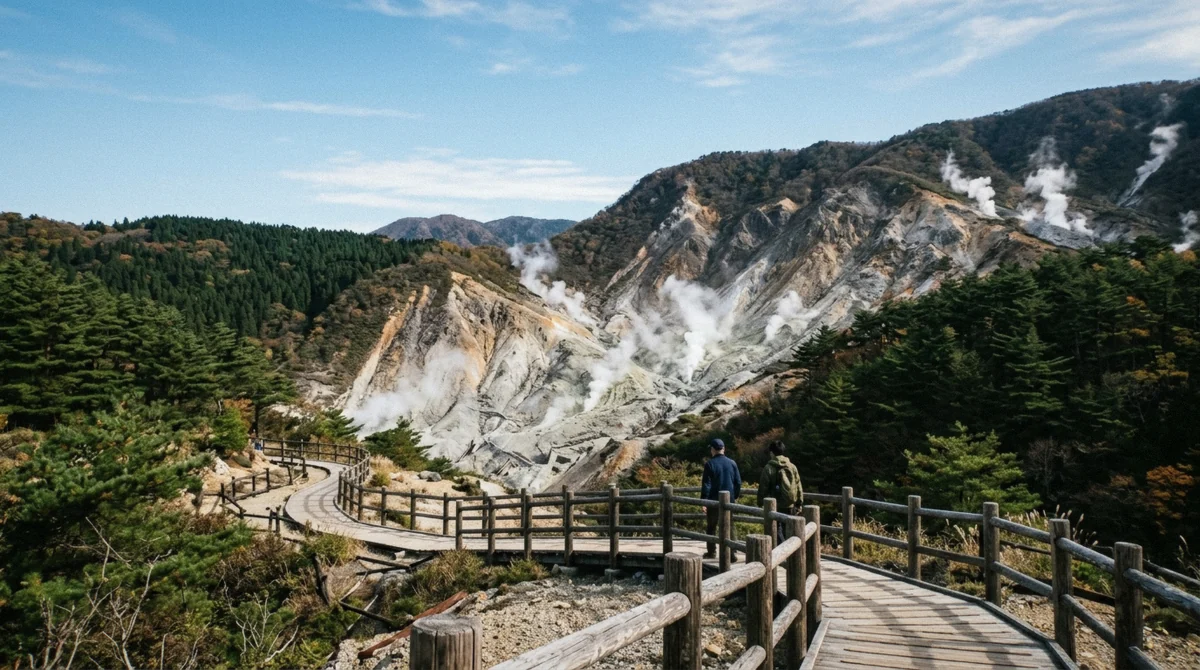
Almost every operator here offers the same fork, usually labelled Itinerary A and Itinerary B. Itinerary A stays in the Fuji Five Lakes: Chureito Pagoda, the 5th Station, Oshino Hakkai, Lake Kawaguchiko, Oishi Park, Kitaguchi Hongu Fuji Sengen Shrine. Itinerary B trades half of that for Hakone, where you get Lake Ashi and its pirate ships, Hakone Shrine on the wooded shore, the Owakudani volcanic valley with its sulphur vents and black eggs, and the ropeway over the top.
Hakone is a different landscape and a longer drive, so you see Fuji from further away and spend more of the day in the car. Choose it if you have already seen the lakes, or if the forecast has written off the mountain and you want a day out that does not depend on it.
For a first visit, Itinerary A is the stronger day. The Hakone loop deserves its own trip rather than half of this one.
Itinerary A: Chureito Pagoda, 5th Station, Oshino Hakkai, Lake Kawaguchiko, Oishi Park
Itinerary B: Lake Ashi, Hakone Shrine, Owakudani, Hakone Ropeway, one Fuji viewpoint
Families with small children get the most obvious benefit. The car stops when a three-year-old needs it to, baby seats come free on request from at least two operators, and nobody counts heads back onto a coach. One operator also carries a wheelchair, which no shared bus in this corridor offers.
Halal and vegetarian travellers get a real advantage too. Two operators arrange meal stops at Muslim-friendly or vegetarian restaurants, and one reviewer specifically thanks their guide for finding halal food between stops. On a shared tour you eat where the bus stops.
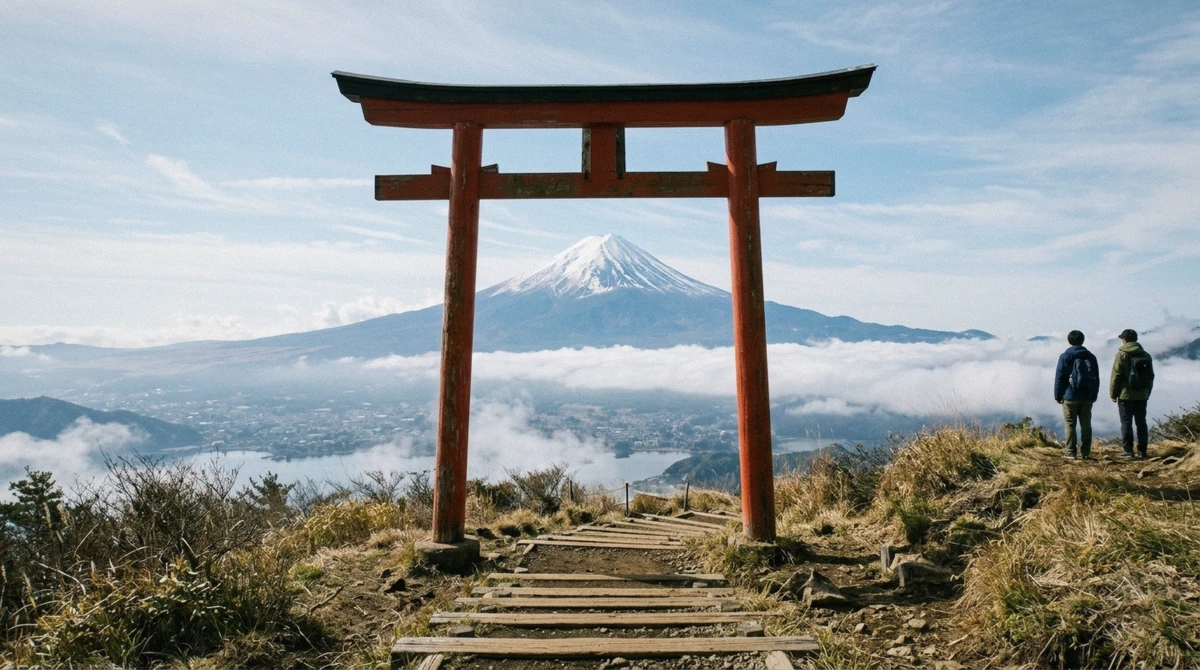
Photographers should look at the tours that name their stops rather than the ones that promise flexibility. The twelve-stop menu includes Tenku no Torii and Lake Yamanaka, both quieter than Kawaguchiko, and the BBQ day builds a guided photo session around Lake Motosu, the view printed on the 1,000 yen note.
One caveat worth reading twice: some listings are a driver service rather than a licensed guide. The driver plans the route, drives it and shares local tips, but does not guide you around inside the attractions. Two of the tours here say so in their own words, which is more honest than the ones that stay quiet about it.
What Is Not Included
Read the exclusions before the inclusions. On these ten tours the pattern barely changes: the price covers the vehicle, the driver, fuel, tolls and parking, and everything you consume or walk into is yours to pay.
Entry tickets are the big one. The 5th Station road toll of 2,800 yen, the 300 yen museum house at Oshino Hakkai, 500 yen at Saiko Iyashi-no-Sato Nemba, 350 yen ($2) each at the Narusawa Ice Cave and the Fugaku Wind Cave, and about 1,000 yen, roughly $6, a head for the Mount Fuji Panoramic Ropeway up Mount Tenjo.
Meals are excluded on nine of the ten. Only the BBQ tour includes lunch. Gratuities are optional everywhere and expected nowhere, since tipping is not a Japanese custom.
Airport and port pickups sit outside the standard price on most listings. One operator publishes the surcharges: 25,000 yen for Narita, 7,000 for Haneda, 20,000 for Yokohama or Kawasaki, so about $150, $43 and $122. If you are heading to Fuji straight from a flight, price that in before you compare.
Entry tickets and the 2,800 yen ($17) Subaru Line toll
Lunch and drinks, except on the BBQ tour
Ropeway, cave and museum admissions, roughly 300 to 1,000 yen each, $2 to $6
Airport or port pickup, quoted separately by most operators
Overtime beyond the booked hours, $50 (¥8,200) an hour with one operator
Four Ways to See Mount Fuji from Tokyo
The same 109 km, four different bills at the end of the day.
How
What it costs
Who it fits
Private car and driver
$274.67 to $490.04 per group, ¥45,000 to ¥80,000, 8 to 12 hours
Groups of three or more, families, anyone who wants five or six stops
Nationally-licensed guide
177,000 yen, about $1,080, for two on a 10-hour day, admissions included
Travellers who want an interpreter-guide and no gate fees to think about
Shared coach tour
From $49 per person, about ¥8,000, fixed itinerary
Solo travellers and couples on a budget
Train or bus, then local buses
About 4,200 yen train or 2,200 yen bus each way, $26 or $13
Independent travellers happy with two or three stops
Private prices are per vehicle. Divide by your group size before you compare them with a per-person coach seat.
Where a Private Fuji Day Goes
Every itinerary on this page draws from the same set of stops, spread around the northern base of the mountain. The drive from Tokyo enters the valley at Kawaguchiko and the day loops from there.
Standard stops
Optional extras
When Mount Fuji Shows Itself
Odds of a clear view from the Kawaguchiko side, month by month. Roughly 80 days a year in total, and they are not spread evenly.
JanBest odds of the yearDry air, snow to the base, 60 to 70 percent of days clear. Cold at the 5th Station road
FebThe photographer's monthThe strongest visibility in the record, with the full cone showing on close to four days in five
MarClear and thawingGood views hold into early spring. Snow can still close the road above the lakes
AprCherry blossom weeksChureito Pagoda at its busiest, 650 cherry trees at Arakurayama, parking at 1,000 yen, about $6, during the festival
MayGreen and steadyThe Subaru Line reopens fully, crowds thin between the blossom and the climbing season
JunRainy seasonVisibility falls to 10 to 15 days in the month. Book for the day out, not the photograph
JulCars banned from 3 JulyShuttle buses replace private vehicles on the Subaru Line. Only 20 to 30 percent of days show the mountain
AugClimbing season, heat hazeBusiest month on the mountain, worst month for seeing it. Early morning is the only reliable window
SepThe ban lifts on 10 SeptemberPrivate cars return to the 5th Station road. Typhoon risk runs through the month
OctAutumn colourMaples along the Kawaguchiko shore, air clearing, first snow on the summit late in the month
NovThe sweet spotAutumn leaves, a white cap, and the return of winter visibility. Dates go early
DecCold and clear60 to 70 percent of days show the mountain. Heavy snow can close the 5th Station road at short notice
Early morning beats every other window in every month, which is why several operators start at 6:30.
What Travellers Say
★★★★★★★★★★
Our guide Usman suggested we get a really early start (6:30 am) to beat the crowds and have the best visibility. We were picked up in a very comfortable mini van and beat the crowds and the cloud cover that moved in later. Usman very thoughtfully put together the itinerary for short drives in between our stops and also accommodated our very special request to add in the Fuji Speedway museum.
Winnie R. · Viator review, July 2026
★★★★★★★★★★
It happened to be a rainy day. However, even with the rain, it was a wonderful tour. Our guide, Ahamed, arrived on time and suggested an itinerary; he asked if we had any preferences and recommended a few interesting and beautiful places to visit on a rainy day. […] Since we didn't get to see Mount Fuji that day, we'll definitely go back.
Milda R. · Viator review, June 2026
★★★★★★★★★★
Despite having limited time as we needed to return to Tokyo by 3 PM, he carefully planned the day and covered 6 beautiful spots around Mount Fuji. […] The weather was perfect, the views were breathtaking, and the entire experience became unforgettable because of their professionalism and hospitality.
Kiran P. · Viator review, May 2026
Quotes come from the Viator and GetYourGuide listings for the tours on this page, reproduced as written. Shortened quotes are marked with an ellipsis.
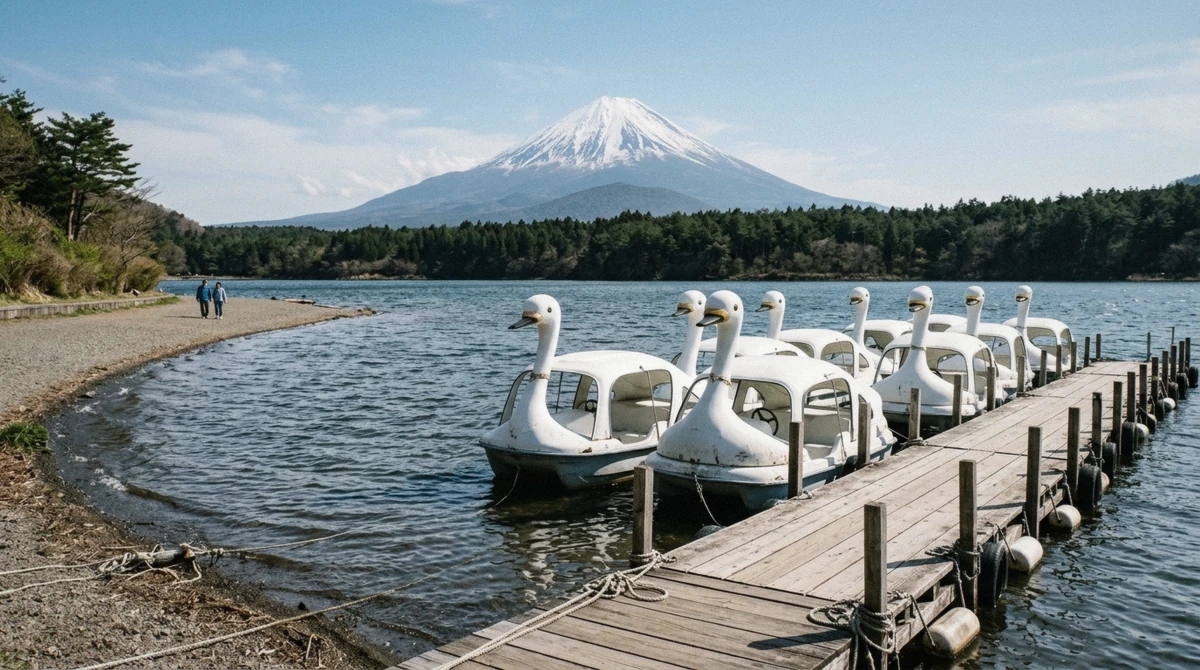
Lake Yamanaka is the highest of the Fuji Five Lakes and the closest to the mountain. It appears on the twelve-stop menu and almost nowhere else.
How to Read These Listings
The price is per car, not per head
A $490 group tour, about ¥80,000, reads dearer than a $274.67 per-person day until five of you climb into it. Divide by your group size before you compare anything.
The 2,800 yen line is a road toll
Listings call it a Mount Fuji entrance fee. It is the Fuji Subaru Line toll, charged once per vehicle, and it only applies if the 5th Station is on your route.
Summer changes the itinerary
Private cars cannot use the Subaru Line from 3 July to 10 September 2026. In that window the 5th Station means a park-and-shuttle, or it drops off the list.
Driver-guide is not always a guide
Two operators state plainly that they provide a driver service, not guiding inside attractions. That is worth knowing before you pay a guide's price.
Written by someone who drives this road
Aya has worked the Tokyo to Kawaguchiko corridor since 2013. The stop times, gate fees and toll figures come from the road, not from a brochure.
We take no payment
Bookings go through GetYourGuide or Viator, on their terms and with their support. We compare the tours; they handle the money.
The Standard Ten-Hour Route
Six stops in the order most drivers run them, timed the way a 10 hours day actually falls.
Chureito Pagoda398 steps, 45 min to 2 hrs, free
5th Station, 2,300 m1 hr, 2,800 yen ($17) toll per car
Oshino Hakkai50 min, eight spring ponds, free
Lake Kawaguchiko30 min lakeside, ropeway optional
Oishi Park30 min, flower beds and the cone
Lawson Kawaguchiko20 min, the convenience store shot
Four or five main stops is the realistic ceiling for one day. A sixth means less time at each.
The Route Before You Book It
Three clips filmed on the ground a private day covers: the stops around Lake Kawaguchiko, the seven viewpoints most itineraries draw from, and the walk up to Chureito Pagoda.
What to do around Mount Fuji: a Kawaguchiko day trip guide
Tokyo Cheapo walks through the stops on the north shore and what each one is worth on a single day.
Video: YouTube
Mount Fuji day trip at Lake Kawaguchiko: seven viewpoints
A traveller films the seven spots most private itineraries pick from, including Oishi Park and the Kachi Kachi ropeway.
Video: YouTube
Kawaguchiko and Chureito Pagoda in autumn, filmed on foot
The 398 steps and the pagoda view in late autumn colour, shot without commentary.
Video: YouTube
Videos load only after you click, and play through youtube-nocookie.com.
Your guide
Aya Mizuno
Fuji Five Lakes guide and driver · working the Tokyo to Kawaguchiko corridor since 2013
I grew up in Fujiyoshida, close enough to Arakurayama Sengen Park that the 398 steps were a childhood shortcut, and I have driven visitors between Tokyo and the Fuji Five Lakes since 2013. Most of my work is the same ten-hour loop these tours run: out on the Chuo Expressway before seven, Chureito Pagoda while the light is still low, the 5th Station when the road allows it, and back into the city before the evening traffic sets. I built this guide around the questions passengers ask in the car. What the ¥2,800 line on the booking actually pays for. Why the road shuts for ten weeks every summer. Whether the mountain will be out at all. Every fee and time here is checked against what the operators and the road authorities publish now.
Questions People Ask Before Booking
How much does a private Mount Fuji tour cost?
Between $297 and $490 for the whole vehicle, about ¥49,000 to ¥80,000, on the driver-guide tours listed here, covering up to two, three, five or six people depending on the car. One tour prices per person instead, at $274.67, about ¥45,000, with a BBQ lunch included. A different market exists above that: a nationally-licensed interpreter-guide with a private car and all admissions included runs 177,000 yen for two people on a 10-hour day, 182,000 for three and 185,000 for four, so about $1,080, $1,110 and $1,130. The full day-trip cost breakdown walks through every fee, extra and per-head split.
Is a private Mount Fuji tour worth it compared with the train or a bus tour?
For one or two people on a budget, no. The Fuji Excursion train costs about 4,200 yen each way ($26), the Shinjuku highway bus about 2,200 yen ($13), and a seat on a shared coach day tour starts around $49, roughly ¥8,000. For three or more, the maths flips: at $297 for up to six, about ¥49,000, a private car costs $49.50 a head with a full vehicle, and you get five or six stops instead of the two or three a public-transport day allows. We weigh both sides properly in our honest worth-it verdict.
Can a private car still drive to the Mount Fuji 5th Station?
Outside summer, yes. The Fuji Subaru Line runs to the 5th Station at 2,300 metres and a passenger car pays a 2,800 yen toll, about $17. From 3 July to 10 September 2026, private vehicles are banned from the road and everyone transfers to a shuttle bus at the base. Heavy snow can also close the road at short notice in winter, so no operator will guarantee the 5th Station between December and March. Planning to go up by train or bus instead? Our DIY Fuji day guide covers fares and the summer shuttle.
What does a private Mount Fuji tour from Tokyo include?
Hotel pickup and drop-off inside Tokyo's 23 wards, an air-conditioned vehicle, fuel, highway tolls, parking and an English-speaking driver or driver-guide. Several add bottled water and a Wi-Fi hotspot. Entry tickets, meals and the Subaru Line toll are not included on any tour here, and the ropeway above Lake Kawaguchi costs about 1,000 yen, roughly $6, a head on top.
How long is a private Mount Fuji day tour from Tokyo?
Eight to twelve hours door to door. The drive is about 109 km each way and takes roughly two hours in clear traffic, which leaves six to eight hours in the Fuji area. Pickups run from 6:30 to 9:00, and the early slots exist because cloud builds over the mountain as the morning goes on. One operator charges $50 per hour, about ¥8,200, for time beyond the booked 10 hours.
When is Mount Fuji actually visible?
On roughly 80 days a year from the Kawaguchiko side. December to February gives the best odds at 60 to 70 percent of days, and February records the strongest visibility of the year. June and July fall to 20 to 30 percent. One operator states in its own listing that the mountain is clear 70 to 80 days a year and can hide behind cloud on a sunny day. Early morning is the most reliable window in every season. For the month-by-month odds, see when Mount Fuji actually shows itself.
Are the drivers licensed to carry passengers?
Ask, and check the plate. A vehicle licensed to carry paying passengers in Japan wears a green number plate; a private car wears a white plate. Paid transport in a white-plate car breaches the Road Transportation Act and carries up to three years in prison or a fine of up to 3 million yen, around $18,000, and the passengers are not covered by commercial insurance. One tour on this page states its green plates, commercial driving permit and commercial insurance in the listing.
Can a private tour handle halal food, a wheelchair or small children?
Some can. Two operators arrange halal, Muslim-friendly or vegetarian meal stops on request. One carries a wheelchair and provides a baby seat, and another offers infant seats. None of this is standard, so send the request in the booking notes rather than assuming it on the day.
Pick your date first and the tour second. Winter mornings give you the mountain, summer gives you the shuttle bus, and both sell out before the prices move.
 from $327 per group (up to 5)